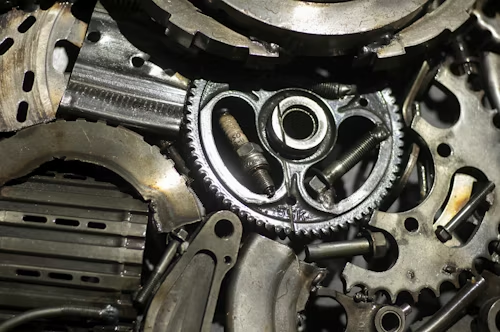
Introduction
Have you ever wondered what makes your car move? The heart of every vehicle is its engine, a marvel of engineering that converts fuel into motion. Understanding how a car engine works is essential for every car owner and enthusiast. In this comprehensive guide, we'll explore the fundamental principles behind internal combustion engines and how they power your vehicle.
The automotive engine is a complex system comprised of hundreds of precision components working together to generate power. From the earliest steam engines to today's highly efficient powerplants, engine technology has evolved tremendously over the decades. Today, we'll dive deep into the inner workings of car engines to help you better understand this mechanical marvel that powers our world.
Whether you're a curious driver, an automotive student, or simply someone who wants to understand the machine you rely on daily, this article will provide you with a solid foundation of knowledge about car engines. We'll break down complex concepts into easy-to-understand explanations, making engine mechanics accessible to everyone.
Main Concept: What is an Internal Combustion Engine?
An internal combustion engine is a heat engine where the combustion of a fuel occurs with an oxidizer (usually air) in a combustion chamber that is an integral part of the working fluid flow circuit. In simpler terms, it's an engine that burns fuel inside itself to create power. This is different from external combustion engines, like steam engines, where combustion happens outside the engine.
The internal combustion engine operates based on the fundamental laws of thermodynamics. When fuel burns inside the engine, it produces high-temperature, high-pressure gases. These expanding gases push against pistons, creating mechanical motion. This motion is then transferred through the drivetrain to the wheels, ultimately propelling the vehicle forward. The efficiency of an internal combustion engine depends on various factors, including compression ratio, combustion efficiency, and thermal management.
Modern car engines are primarily divided into two main categories: gasoline engines and diesel engines. Gasoline engines use spark plugs to ignite the air-fuel mixture, while diesel engines rely on compression ignition. While their operating principles differ slightly, both follow the same basic cycle: intake, compression, combustion, and exhaust. This four-stroke cycle is repeated thousands of times per minute, providing continuous power to move your vehicle.
The concept of converting chemical energy from fuel into mechanical energy has revolutionized transportation. Before the internal combustion engine, people relied on horses, steam power, or human power for transportation. The invention of the internal combustion engine made personal transportation affordable and practical for millions of people worldwide, fundamentally changing society and how we live our lives.
Components and Parts: Key Engine Components
Understanding the four-stroke cycle is just the beginning. Let's explore the key components that make this process possible:
Cylinder Block
The cylinder block is the main structure of the engine. It houses the cylinders where the pistons move up and down. Most car engines have between 4 and 8 cylinders, arranged in various configurations such as inline, V-shaped, or flat. The cylinder block is typically made of cast iron or aluminum alloy and must withstand high temperatures and pressures. The block also contains coolant passages that circulate coolant to keep the engine at an optimal operating temperature. Modern aluminum blocks are lighter and dissipate heat more efficiently than traditional cast iron blocks, contributing to better fuel economy and performance.
Pistons
Pistons are cylindrical metal components that move up and down inside the cylinders. They're connected to the crankshaft by connecting rods and are responsible for compressing the air-fuel mixture and transferring the force of combustion to the crankshaft. Pistons must be able to withstand extreme temperatures and pressures while remaining lightweight to reduce inertia. Modern pistons are typically made of aluminum alloys and are precision-machined to ensure a perfect fit with the cylinder walls. Piston rings seal the gap between the piston and cylinder wall, preventing combustion gases from escaping and oil from entering the combustion chamber.
Crankshaft
The crankshaft converts the reciprocating (up-and-down) motion of the pistons into rotational motion. This rotational motion is what ultimately turns the wheels of your car through the transmission and drivetrain. The crankshaft is a complex forged component with multiple throws, each corresponding to a piston. It also drives the camshaft, oil pump, and other auxiliary systems. The crankshaft must be extremely strong to withstand the tremendous torque and vibrations generated by the engine. Main bearings support the crankshaft in the block, while rod bearings connect it to the connecting rods.
Valves
Engines have intake and exhaust valves that control the flow of air and fuel into the cylinders and the flow of exhaust gases out. These valves open and close at precise times to ensure proper engine operation. The valves are operated by the camshaft, which is synchronized with the crankshaft via a timing belt or chain. Valves must operate under high temperatures and pressures while maintaining a good seal to prevent gas leakage. Modern engines often use multiple valves per cylinder (typically 4 valves: 2 intake and 2 exhaust) to improve airflow and engine efficiency.
Spark Plugs
Spark plugs provide the spark that ignites the air-fuel mixture in gasoline engines. They're crucial for proper combustion and engine performance. Diesel engines don't use spark plugs; instead, they rely on compression ignition. Spark plugs must be able to operate under extreme pressure and temperature while producing a strong enough electrical arc to ignite the mixture. Modern spark plugs use precious metals like platinum or iridium for their electrodes to improve durability and performance. Worn spark plugs can cause misfires, reduced fuel economy, and poor engine performance.
Fuel System
The fuel system is responsible for delivering the right amount of fuel to the engine. Modern engines use electronic fuel injection systems, which precisely control the amount and timing of fuel injection based on input from various sensors. The fuel system includes the fuel pump, fuel filter, fuel injectors, and fuel pressure regulator. Efficient fuel injection improves fuel economy and reduces emissions. Direct injection, where fuel is injected directly into the combustion chamber, is becoming increasingly common as it offers better control over the combustion process and improves efficiency.
Cooling System
The cooling system keeps the engine operating at its optimal temperature range. It includes the water pump, radiator, thermostat, and coolant. The coolant circulates through the engine and radiator, carrying away heat generated by combustion. The thermostat regulates the flow of coolant to ensure the engine reaches its operating temperature quickly and maintains the proper temperature under all conditions. An efficient cooling system is essential because engines that run too hot can suffer serious damage, while engines that run too cold are inefficient and produce more emissions.
Lubrication System
The lubrication system reduces friction between moving parts and helps cool the engine. Oil is pumped from the oil pan through passages in the engine to lubricate bearings, pistons, and other moving components. The oil filter removes contaminants from the oil, and the oil pump maintains proper oil pressure. Proper lubrication is critical for engine longevity and performance. Modern engines use synthetic oils that offer better protection and longer service intervals than conventional mineral oils.
Examples and Applications: Different Types of Car Engines
While most car engines follow the same basic principles, there are several different types:
Gasoline Engines
Gasoline engines use spark plugs to ignite the air-fuel mixture. They're known for their smooth operation and good performance at high RPMs. Most modern cars use gasoline engines. Gasoline engines are typically quieter than diesel engines and produce fewer particulate emissions. However, they're generally less fuel-efficient than diesel engines and produce less torque. Gasoline engines are preferred for passenger cars due to their smooth power delivery and lower cost compared to diesel engines. Modern gasoline engines incorporate technologies like direct injection, turbocharging, and variable valve timing to improve efficiency and performance.
Diesel Engines
Diesel engines don't use spark plugs. Instead, they rely on compression ignition, where the air is compressed to such a high temperature that the fuel ignites spontaneously when injected. Diesel engines are more fuel-efficient and produce more torque than gasoline engines, but they're typically noisier and produce more nitrogen oxides. Diesel engines are commonly used in trucks, SUVs, and commercial vehicles due to their high torque output, which is suitable for heavy-duty applications. Modern diesel engines use advanced emission control systems like selective catalytic reduction (SCR) and diesel particulate filters to reduce emissions.
Hybrid Engines
Hybrid vehicles combine a traditional internal combustion engine with an electric motor and battery. They can operate on either power source alone or both together, offering improved fuel efficiency and reduced emissions. Hybrid systems can recover energy during braking (regenerative braking) and use the electric motor at low speeds while the engine handles highway driving, resulting in optimal fuel economy. There are different types of hybrid systems, including mild hybrids, full hybrids, and plug-in hybrids, each offering different levels of electric-only driving capability and efficiency improvements.
Electric Motors
While not internal combustion engines, electric motors are becoming increasingly common in modern vehicles. They're simpler, more efficient, and produce instant torque. Fully electric vehicles (EVs) use only electric motors, while hybrids use them in combination with traditional engines. Electric motors don't require complex transmissions because they can produce constant torque across a wide range of speeds. The growing popularity of electric vehicles represents a significant shift in automotive technology, offering zero tailpipe emissions and lower operating costs compared to traditional internal combustion engines.
Turbocharged Engines
Turbocharged engines use a turbocharger to force more air into the engine, allowing it to burn more fuel and produce more power. The turbocharger is driven by exhaust gases and can significantly increase an engine's power output without significantly increasing engine size. Turbocharging technology is widely used in both high-performance vehicles and modern fuel-efficient cars. Modern turbocharged engines often use twin-scroll turbos, variable geometry turbos, or even multiple turbos to reduce turbo lag and improve response across the engine's operating range.
Rotary Engines
Rotary engines, also known as Wankel engines, use a different design than traditional piston engines. Instead of pistons moving up and down, they use a triangular rotor that rotates within an oval housing. Rotary engines are compact and can achieve high RPMs, but they're less fuel-efficient and produce more emissions than piston engines. They're primarily used in sports cars like the Mazda RX series. Despite their limited adoption, rotary engines have a dedicated following due to their unique characteristics and smooth power delivery.
Real-World Examples
For example, a typical 2.0L four-cylinder engine produces around 150-200 horsepower.
Consider the Toyota Prius, which uses a hybrid system to achieve over 50 MPG.
The Ford F-150's 3.5L EcoBoost V6 engine produces 400 horsepower while maintaining good fuel efficiency.
Data and Statistics
According to SAE International, approximately 90% of modern engines are related to advanced materials and manufacturing techniques.
Source: SAE International
According to EPA, approximately 25% of fuel efficiency improvements are related to hybrid technology.
Source: EPA
Practical Checklist
- Check the engine oil level and condition
- Inspect the air filter for dirt and debris
- Verify coolant level and quality
- Check all belts and hoses for wear
- Inspect spark plugs for wear or damage
Frequently Asked Questions
Q: What is the most common cause of engine failure?
A: The most common cause of engine failure is lack of proper maintenance, particularly not changing the oil regularly. Dirty oil can cause excessive wear on engine components, leading to premature failure.
Q: How often should I change my engine oil?
A: Most manufacturers recommend changing your oil every 5,000 to 7,500 miles for conventional oil, or every 10,000 to 15,000 miles for synthetic oil. Always check your owner's manual for specific recommendations.
Technical Deep Dive
Let's explore the technical aspects in greater detail. Understanding the underlying principles and mechanisms provides a foundation for more advanced automotive knowledge and practical applications.
Key Technical Principles
- Principle 1: The fundamental physics and engineering concepts that govern this system
- Principle 2: How these principles are applied in real-world scenarios
- Principle 3: The mathematical and scientific foundations behind the technology
Advanced Applications
Modern applications of this technology have evolved significantly. Current implementations include sophisticated control systems, advanced materials, and integration with other vehicle systems. These advancements have improved efficiency, safety, and performance dramatically.
Visual Learning Resources
While this article provides comprehensive text explanations, visual aids can enhance understanding. Consider the following resources for additional learning:
- Diagrams: Look for technical diagrams showing component relationships and system interactions
- Infographics: Visual representations of data and statistics help grasp complex information quickly
- Video Tutorials: Step-by-step video demonstrations provide practical guidance
- Interactive Simulations: Online tools allow you to experiment with concepts safely
These resources complement the written content and cater to different learning styles. Visual learners particularly benefit from diagrams and infographics, while hands-on learners may prefer video tutorials and simulations.
Conclusion
Understanding how your car engine works is the first step toward becoming a more knowledgeable car owner. The internal combustion engine is a complex but fascinating piece of engineering that has powered vehicles for over a century. By knowing the basics of engine operation and maintenance, you can better care for your vehicle and appreciate the technology that gets you from point A to point B.
Whether you're a car enthusiast or simply want to understand your vehicle better, knowing how your engine works will help you make informed decisions about maintenance and potentially identify problems before they become serious. The engine is one of the most complex and important components of your car, and understanding its operation will make you a more responsible car owner.
As automotive technology continues to evolve, engines are constantly improving. From traditional internal combustion engines to hybrids and fully electric vehicles, the future of automotive powertrains is full of innovation and possibilities. However, no matter how technology changes, understanding the basic principles remains key to appreciating and maintaining your vehicle.
Keep learning, stay curious, and enjoy the drive! By understanding your engine, you can not only extend the life of your vehicle but also improve your driving experience and make more informed decisions when it comes to repairs and maintenance. Remember that proper maintenance is essential for keeping your engine running smoothly for years to come.