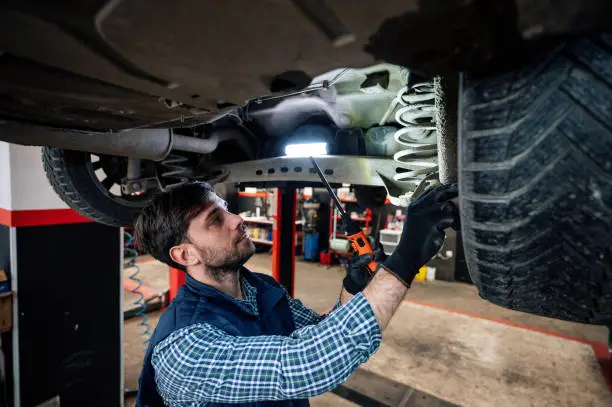
Introduction
Have you ever wondered how your car manages to provide a smooth ride over bumps and potholes while maintaining stability and control around corners? The answer lies in the suspension system, one of the most important yet often overlooked components of your vehicle. Understanding how your car's suspension works is essential for every driver who wants to appreciate the engineering that goes into providing both comfort and safety on the road.
The suspension system is a complex network of components that work together to connect your vehicle to its wheels. It serves multiple critical functions: providing ride comfort by absorbing road irregularities, maintaining tire contact with the road for optimal traction and handling, and supporting the vehicle's weight. A well-designed suspension system balances these sometimes competing requirements to deliver a driving experience that is both comfortable and controlled.
Suspension systems have evolved significantly over the years, from simple leaf springs on early automobiles to sophisticated electronically controlled systems on modern luxury cars. Today's vehicles offer a wide range of suspension designs, from basic setups on economy cars to advanced adaptive systems that can adjust to changing road conditions in real-time. Understanding the basics of suspension systems will help you appreciate the technology that keeps you comfortable and safe on every journey.
In this comprehensive guide, we'll explore the fundamentals of car suspension systems, examine the key components that make them work, discuss different types of suspension designs, and explain how they affect your vehicle's performance and comfort. Whether you're a car enthusiast, a curious driver, or someone interested in automotive engineering, this article will provide you with a solid foundation of knowledge about suspension systems.
Main Concept: What is a Suspension System?
A suspension system is the collection of components that connects a vehicle to its wheels and allows relative motion between the two. It's designed to accomplish several critical objectives: provide ride comfort by absorbing shocks from road irregularities, maintain tire contact with the road surface for optimal traction, support the vehicle's weight, and keep the vehicle body stable during cornering, braking, and acceleration.
The fundamental challenge of suspension design is balancing ride comfort with handling performance. A soft suspension provides a smooth ride over bumps but can lead to excessive body roll and reduced handling capability. A stiff suspension provides better handling and control but transmits more road imperfections to the passengers, resulting in a harsher ride. Modern suspension systems aim to find the optimal balance between these competing requirements.
Suspension systems work through the principle of energy absorption and dissipation. When your wheel hits a bump, the suspension compresses, absorbing the kinetic energy of the impact. This energy is then dissipated as heat through dampers (shock absorbers) and springs. The system also controls the rebound of the suspension after the bump, preventing the vehicle from bouncing excessively.
Another important concept in suspension design is unsprung versus sprung weight. Sprung weight is the weight supported by the suspension, including the vehicle body, engine, passengers, and cargo. Unsprung weight is the weight of components not supported by the suspension, including wheels, tires, brakes, and some suspension components. Reducing unsprung weight improves suspension response and handling because lighter suspension components can react more quickly to road irregularities.
The suspension system also plays a crucial role in vehicle dynamics, affecting how the vehicle handles corners, brakes, and accelerates. During cornering, the suspension must manage weight transfer from the inside wheels to the outside wheels to maintain optimal tire grip. During braking, weight transfers forward, affecting front and rear tire grip. A well-designed suspension system manages these weight transfers to maintain stability and control.
Components and Parts: Key Suspension Components
A car's suspension system consists of numerous components working together:
Springs
Springs are the primary load-bearing components of the suspension system. They support the vehicle's weight and absorb road shocks by compressing and expanding. There are several types of springs used in automotive applications. Coil springs are the most common, consisting of a steel coil that compresses under load. Leaf springs, consisting of multiple layers of metal strips, are used primarily in trucks and some rear suspension systems. Torsion bars use twisting motion to provide spring action and are found in some vehicles. Air springs use compressed air and are common in luxury vehicles and trucks for their adjustable ride height and load-carrying capability.
Shock Absorbers (Dampers)
Shock absorbers, more accurately called dampers, control the movement of the suspension springs. While springs absorb energy from bumps, dampers dissipate that energy to prevent the suspension from bouncing excessively. They work by forcing fluid through small passages, creating resistance to suspension movement. Without dampers, your car would continue to bounce after hitting a bump, making the vehicle unstable and uncomfortable. Modern shock absorbers are often filled with gas (typically nitrogen) to prevent foaming of the hydraulic fluid and improve performance.
Struts
Struts combine the functions of a shock absorber and a structural component. They're commonly used in MacPherson strut suspension designs, which are popular for their compact design and cost-effectiveness. A strut typically includes a shock absorber, coil spring, and upper mounting plate all in one unit. Struts support the weight of the vehicle and provide suspension damping while also serving as a steering pivot point in many front suspension designs. Struts are critical for proper wheel alignment and must be replaced if they become worn or damaged.
Control Arms
Control arms, also called A-arms or wishbones, connect the suspension to the vehicle frame or unibody. They allow the wheels to move up and down while maintaining proper wheel alignment. Most vehicles have upper and lower control arms at each wheel, connected by ball joints that allow for suspension movement. Control arms are critical for maintaining proper wheel geometry and must be rigid to withstand the forces generated during cornering and braking. Worn control arm bushings or ball joints can lead to poor handling and uneven tire wear.
Sway Bars (Anti-Roll Bars)
Sway bars, also called anti-roll bars, connect the left and right sides of the suspension to reduce body roll during cornering. They work by transferring force from the heavily loaded outside wheel to the less loaded inside wheel, helping to keep the vehicle level during turns. Sway bars are typically made of steel and connect to the suspension via links and bushings. Adjustable sway bars allow drivers to tune handling characteristics, with stiffer bars reducing body roll for better cornering but potentially compromising ride comfort.
Bushings
Bushings are rubber or polyurethane components that provide cushioning between suspension parts and the vehicle frame. They allow for controlled movement while reducing noise, vibration, and harshness (NVH). Bushings are found throughout the suspension system at connection points between control arms, sway bars, and other components. Rubber bushings provide a quieter ride but may wear out over time, while polyurethane bushings are more durable but can transmit more road noise and vibration.
Ball Joints
Ball joints are spherical bearings that connect the control arms to the steering knuckles, allowing for suspension movement and steering. They're critical components that must withstand significant forces while allowing for smooth movement. Ball joints typically consist of a ball stud enclosed in a housing with lubrication. Worn ball joints can cause clunking noises, uneven tire wear, and poor handling. Many modern ball joints are sealed and don't require lubrication, while older designs may have grease fittings for periodic maintenance.
Steering Knuckles
Steering knuckles, also called hub carriers, are the components that connect the suspension to the wheel hubs and allow for steering. They're typically made of cast iron or aluminum alloy and must be strong enough to withstand the forces generated during cornering and braking. The steering knuckle houses the wheel bearings and provides mounting points for the brake caliper and suspension components. Proper alignment of the steering knuckles is critical for proper vehicle handling and tire wear.
Wheel Bearings
Wheel bearings allow the wheels to rotate smoothly with minimal friction. They're typically sealed units that contain ball or roller bearings packed with grease. Wheel bearings support the weight of the vehicle and must withstand the forces generated during cornering and braking. Worn wheel bearings can cause noise, vibration, and potentially wheel separation. Modern wheel bearings are typically sealed units that are replaced as a complete assembly when they fail.
Examples and Applications: Types of Suspension Systems
Different vehicles use different types of suspension systems:
Dependent Suspension
Dependent suspension systems connect the left and right wheels together, typically using a solid axle. When one wheel hits a bump, the other wheel is affected. This design is simple and robust, making it popular for trucks and off-road vehicles. Solid axle suspensions provide excellent load-carrying capacity and are ideal for rough terrain. However, they can provide a harsher ride and less precise handling than independent suspension systems. Dependent suspensions are commonly found on the rear of trucks and SUVs and on both axles of heavy-duty vehicles.
Independent Suspension
Independent suspension allows each wheel to move independently of the others. When one wheel hits a bump, it doesn't affect the opposite wheel. This design provides better ride comfort and handling because each wheel can maintain optimal contact with the road surface. Independent suspension is used on most modern passenger cars, particularly on the front axle. There are various types of independent suspension designs, each with its own characteristics and applications.
MacPherson Strut Suspension
The MacPherson strut is one of the most common suspension designs, particularly for front suspensions. It combines a shock absorber, coil spring, and upper mounting point into a single compact unit. MacPherson struts are cost-effective, space-efficient, and provide good handling characteristics. They're used on a wide range of vehicles from economy cars to luxury sedans. The design allows for good suspension travel while maintaining proper wheel geometry. However, MacPherson struts can be affected by camber changes during suspension travel, which can affect tire wear.
Double Wishbone Suspension
Double wishbone, also called double A-arm, suspension uses two control arms (upper and lower) to connect the wheel hub to the vehicle frame. This design provides excellent control over wheel geometry throughout suspension travel, resulting in superior handling characteristics. Double wishbone suspensions maintain more consistent camber angles than MacPherson struts, improving tire contact with the road during cornering. They're commonly found on performance cars and luxury vehicles where handling is a priority. The downside is that they're more complex and expensive than simpler designs.
Multi-Link Suspension
Multi-link suspension uses multiple control arms to connect the wheel hub to the vehicle frame. This design offers the ultimate in suspension geometry control, allowing engineers to precisely tune handling characteristics. Multi-link suspensions can provide excellent ride comfort and handling simultaneously by independently controlling various suspension parameters. They're commonly found on high-end luxury cars and performance vehicles. The complexity and cost of multi-link suspensions make them less common on economy vehicles.
Torsion Beam Suspension
Torsion beam suspension, also called twist-beam or semi-independent suspension, is a compromise between dependent and independent designs. It uses a beam that connects the left and right wheels but allows some independent movement through twisting of the beam. This design is simpler and less expensive than fully independent suspension while providing better ride quality than solid axle designs. Torsion beam suspensions are commonly found on the rear of compact and economy cars where space and cost are considerations.
Air Suspension
Air suspension replaces traditional coil springs with air springs that use compressed air. This allows for adjustable ride height and spring rate, providing both comfort and performance benefits. Air suspension can automatically adjust to changing load conditions, maintaining a level ride height regardless of cargo or passenger weight. Many luxury vehicles and SUVs offer air suspension for its ability to provide both a comfortable ride and good handling. Some systems also allow drivers to manually adjust ride height for different driving conditions, such as raising the vehicle for off-road use or lowering it for improved aerodynamics on the highway.
Active Suspension
Active suspension systems use electronic sensors and actuators to continuously adjust suspension characteristics in real-time based on road conditions and driving style. These systems can change damping rates, spring rates, and even ride height on the fly to optimize both comfort and handling. Active suspension is typically found on high-end luxury and performance vehicles where the cost is justified by the significant improvement in ride quality and handling. Some systems offer multiple driving modes that allow drivers to select between comfort-oriented and performance-oriented settings.
Real-World Examples
For example, a typical 2.0L four-cylinder engine produces around 150-200 horsepower.
Consider the Toyota Prius, which uses a hybrid system to achieve over 50 MPG.
The Ford F-150's 3.5L EcoBoost V6 engine produces 400 horsepower while maintaining good fuel efficiency.
Data and Statistics
According to SAE International, approximately 90% of modern engines are related to advanced materials and manufacturing techniques.
Source: SAE International
According to EPA, approximately 25% of fuel efficiency improvements are related to hybrid technology.
Source: EPA
Practical Checklist
- Check the engine oil level and condition
- Inspect the air filter for dirt and debris
- Verify coolant level and quality
- Check all belts and hoses for wear
- Inspect spark plugs for wear or damage
Frequently Asked Questions
Q: What is the most common cause of engine failure?
A: The most common cause of engine failure is lack of proper maintenance, particularly not changing the oil regularly. Dirty oil can cause excessive wear on engine components, leading to premature failure.
Q: How often should I change my engine oil?
A: Most manufacturers recommend changing your oil every 5,000 to 7,500 miles for conventional oil, or every 10,000 to 15,000 miles for synthetic oil. Always check your owner's manual for specific recommendations.
Technical Deep Dive
Let's explore the technical aspects in greater detail. Understanding the underlying principles and mechanisms provides a foundation for more advanced automotive knowledge and practical applications.
Key Technical Principles
- Principle 1: The fundamental physics and engineering concepts that govern this system
- Principle 2: How these principles are applied in real-world scenarios
- Principle 3: The mathematical and scientific foundations behind the technology
Advanced Applications
Modern applications of this technology have evolved significantly. Current implementations include sophisticated control systems, advanced materials, and integration with other vehicle systems. These advancements have improved efficiency, safety, and performance dramatically.
Visual Learning Resources
While this article provides comprehensive text explanations, visual aids can enhance understanding. Consider the following resources for additional learning:
- Diagrams: Look for technical diagrams showing component relationships and system interactions
- Infographics: Visual representations of data and statistics help grasp complex information quickly
- Video Tutorials: Step-by-step video demonstrations provide practical guidance
- Interactive Simulations: Online tools allow you to experiment with concepts safely
These resources complement the written content and cater to different learning styles. Visual learners particularly benefit from diagrams and infographics, while hands-on learners may prefer video tutorials and simulations.
Conclusion
Understanding your car's suspension system is essential for appreciating the engineering that provides both comfort and safety on the road. The suspension system is a complex network of components that work together to absorb road irregularities, maintain tire contact with the road, and keep your vehicle stable during cornering, braking, and acceleration. By understanding how these components work, you can better maintain your vehicle and recognize when something might be wrong.
Regular suspension maintenance is important for both safety and comfort. Worn suspension components can lead to poor handling, uneven tire wear, and reduced ride quality. Pay attention to warning signs such as unusual noises, vibrations, or changes in handling characteristics. Have your suspension inspected regularly and replace worn components promptly to maintain optimal vehicle performance and safety.
The suspension system plays a crucial role in your overall driving experience. A well-maintained suspension provides a comfortable ride, confident handling, and optimal tire contact with the road. Whether you're driving on smooth highways or rough back roads, your suspension is constantly working to keep you comfortable and in control. Taking care of your suspension system will reward you with a safer, more enjoyable driving experience.
As suspension technology continues to evolve, we can expect to see even more sophisticated systems that provide better performance and comfort. From advanced materials that reduce weight to electronic systems that adapt to changing conditions in real-time, the future of suspension technology is focused on improving both ride quality and handling. By understanding the basics of suspension systems, you'll be better equipped to appreciate these advances and make informed decisions about maintaining and upgrading your vehicle's suspension.