Introduction
The automotive industry is undergoing a significant transformation as electric vehicles (EVs) gain popularity and challenge the dominance of traditional gasoline-powered cars. As consumers become more environmentally conscious and governments implement stricter emissions regulations, the choice between electric and gasoline vehicles has become increasingly relevant. Understanding the key differences between these two types of vehicles is essential for anyone considering purchasing a new car.
Gasoline cars have been the primary mode of personal transportation for over a century, powered by internal combustion engines that burn fossil fuels. Electric vehicles, while not a new concept, have only recently become viable alternatives for mainstream consumers thanks to advances in battery technology and charging infrastructure. Both types of vehicles have their advantages and disadvantages, and the right choice depends on your individual needs, driving habits, and priorities.
In this comprehensive comparison, we'll examine the fundamental differences between electric and gasoline cars across multiple dimensions including technology, performance, cost, environmental impact, and practical considerations. Whether you're a car buyer trying to decide between electric and gasoline options, an automotive enthusiast interested in the future of transportation, or simply curious about the differences between these technologies, this article will provide you with the information you need to make an informed decision.
Main Concept: Fundamental Differences in Technology
The most fundamental difference between electric and gasoline cars lies in how they generate and deliver power to the wheels. Gasoline cars use internal combustion engines that burn fuel to create mechanical power, while electric cars use electric motors powered by batteries. This fundamental difference in powertrain technology leads to numerous other differences in how the vehicles operate, perform, and are maintained.
Gasoline engines are complex mechanical systems with hundreds of moving parts. They convert the chemical energy in gasoline into mechanical energy through a series of controlled explosions inside cylinders. This process involves intake, compression, combustion, and exhaust strokes that repeat thousands of times per minute. The engine's power is transmitted through a transmission to the wheels, with various components working together to manage power delivery efficiently.
Electric vehicles, on the other hand, use electric motors that convert electrical energy from batteries into mechanical energy. Electric motors are much simpler than internal combustion engines, with far fewer moving parts. They can deliver power directly to the wheels, often without the need for complex transmissions. The simplicity of electric powertrains is one of their key advantages, contributing to higher efficiency, lower maintenance requirements, and potentially greater reliability.
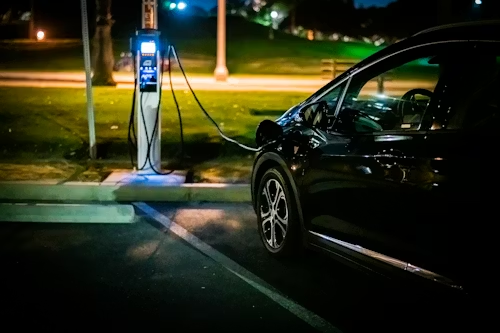
Another fundamental difference is how the vehicles are refueled. Gasoline cars are refueled at gas stations, a process that takes just a few minutes and provides a range of 300-400 miles or more. Electric vehicles are charged by plugging into an electrical outlet or charging station, a process that can take anywhere from 30 minutes to several hours depending on the charging method and battery size. This difference in refueling time and infrastructure is one of the main considerations for potential EV buyers.
The energy storage methods also differ significantly. Gasoline cars store energy in the form of liquid fuel in a tank, which is dense in energy and can be quickly refueled. Electric vehicles store energy in batteries, which are heavier and less energy-dense than gasoline but can be recharged at home. Battery technology is rapidly improving, with modern EVs offering ranges of 200-400 miles on a single charge, though this still generally less than gasoline vehicles.
These fundamental technological differences cascade into every aspect of vehicle ownership, from the driving experience to maintenance requirements, operating costs, and environmental impact. Understanding these differences is crucial for making an informed decision about which type of vehicle best meets your needs.
Components and Parts: Comparing Key Components
The components that make up electric and gasoline vehicles differ significantly:
Power Source
Gasoline cars are powered by internal combustion engines that burn gasoline to generate power. These engines are complex mechanical devices with hundreds of moving parts including pistons, crankshafts, valves, and timing systems. They require regular maintenance including oil changes, spark plug replacements, and timing belt changes. Electric vehicles are powered by electric motors that are much simpler, with far fewer moving parts. Electric motors require minimal maintenance and typically last the life of the vehicle.
Energy Storage
Gasoline vehicles store fuel in a tank, typically holding 12-20 gallons of gasoline. The fuel system includes the tank, fuel pump, fuel filter, and fuel injectors. Electric vehicles store energy in battery packs, typically lithium-ion batteries that weigh hundreds of pounds. The battery pack is the most expensive component of an EV and typically has a warranty of 8-10 years or 100,000-150,000 miles. Battery technology is constantly improving, with newer batteries offering greater energy density and longer lifespans.
Transmission
Gasoline vehicles typically have complex transmissions with multiple gears to keep the engine operating in its efficient range. Automatic transmissions are most common, with 6-10 forward gears, though manual transmissions are still available in some models. Electric vehicles often use single-speed transmissions because electric motors produce maximum torque from zero RPM and can operate efficiently over a wide speed range. This simplicity contributes to the smooth, quiet operation of EVs.
Exhaust System
Gasoline vehicles have complex exhaust systems that include the exhaust manifold, catalytic converter, muffler, and exhaust pipes. These components manage exhaust gases, reduce emissions, and reduce engine noise. Electric vehicles have no exhaust system because they produce no tailpipe emissions. This not only eliminates a source of pollution but also reduces vehicle weight and complexity.
Cooling System
Gasoline engines require complex cooling systems with radiators, water pumps, thermostats, and coolant passages to prevent overheating. Electric vehicles also have cooling systems, but they're typically simpler and primarily designed to cool the battery pack and power electronics rather than an engine. Some EVs use air cooling for the battery, while others use liquid cooling systems for better thermal management.
Braking System
Both types of vehicles use similar braking systems, but EVs often feature regenerative braking that captures kinetic energy during braking and converts it back into electrical energy to recharge the battery. This not only improves efficiency but also extends the life of brake components because the electric motor handles much of the braking, reducing wear on the traditional friction brakes.
Charging vs. Refueling
Gasoline vehicles are refueled at gas stations, a quick process that takes just a few minutes. The infrastructure for gasoline refueling is well-established and ubiquitous. Electric vehicles require charging, which can be done at home using a standard outlet or dedicated charging station, or at public charging stations. Home charging is convenient but slower, while public fast charging can provide 80% charge in 30-45 minutes but requires compatible vehicles and stations.
Examples and Applications: Real-World Comparison
Let's compare electric and gasoline vehicles across various practical considerations:
Performance and Driving Experience
Electric vehicles offer instant torque and smooth, quiet acceleration that many drivers find superior to gasoline vehicles. The absence of gear shifts and engine noise creates a refined driving experience. High-performance EVs can accelerate from 0-60 mph faster than most gasoline sports cars. However, gasoline vehicles still have advantages in top speed and sustained high-speed performance, and many driving enthusiasts prefer the sound and feel of a powerful gasoline engine.
Range and Refueling
Gasoline vehicles typically have longer ranges (300-400+ miles) and can be refueled in minutes at ubiquitous gas stations. Electric vehicles have shorter ranges (200-400 miles) and require charging, which takes longer. However, for daily commuting and local driving, EV range is more than sufficient, and home charging provides the convenience of waking up to a "full tank" every day. For long-distance travel, gasoline vehicles still have the advantage in terms of convenience and time.
Operating Costs
Electric vehicles generally have lower operating costs than gasoline vehicles. Electricity is typically cheaper than gasoline per mile driven, and EVs have fewer maintenance requirements. No oil changes, spark plug replacements, or transmission fluid changes mean significant long-term savings. However, EVs may have higher insurance costs and potential battery replacement costs after the warranty expires. Overall, most studies show that EVs cost less to operate over the vehicle's lifetime.
Purchase Price
Electric vehicles typically have higher upfront purchase prices than comparable gasoline vehicles, largely due to the cost of batteries. However, government incentives and tax credits can reduce this price difference. As battery technology improves and production scales up, EV prices are coming down and approaching parity with gasoline vehicles. Some EV models are already price-competitive with their gasoline counterparts when factoring in incentives and long-term operating cost savings.
Environmental Impact
Electric vehicles produce zero tailpipe emissions and are generally considered more environmentally friendly than gasoline vehicles. However, the environmental impact depends on how the electricity is generated. EVs charged from renewable sources have minimal environmental impact, while those charged from coal-fired power plants may have higher overall emissions. Even accounting for electricity generation, most studies show that EVs have lower lifetime emissions than gasoline vehicles. Gasoline vehicles produce significant emissions throughout their lifecycle, from fuel extraction and refining to tailpipe emissions.
Maintenance and Reliability
Electric vehicles require significantly less maintenance than gasoline vehicles. With no engine oil, spark plugs, timing belts, or transmission fluid to change, maintenance costs are much lower. Electric motors are also more reliable than internal combustion engines, with fewer moving parts that can fail. However, EV batteries may degrade over time and are expensive to replace, though most come with long warranties. Gasoline vehicles require regular maintenance but have proven reliability over decades of development.
Infrastructure and Convenience
Gasoline vehicles benefit from a well-established refueling infrastructure with gas stations everywhere. Refueling takes just a few minutes and provides long range. Electric vehicles require charging infrastructure, which is still developing. Home charging is convenient for many owners, but those without access to home charging may find EV ownership challenging. Public charging networks are expanding rapidly but still less convenient than gas stations for long-distance travel.
Resale Value
Historically, electric vehicles have had lower resale values than gasoline vehicles, partly due to concerns about battery degradation and rapidly improving technology. However, as EV technology matures and becomes more mainstream, resale values are improving. Some popular EV models now maintain resale values comparable to gasoline vehicles. Gasoline vehicles generally have predictable resale values based on brand reputation, mileage, and condition.
Real-World Examples
For example, a typical 2.0L four-cylinder engine produces around 150-200 horsepower.
Consider the Toyota Prius, which uses a hybrid system to achieve over 50 MPG.
The Ford F-150's 3.5L EcoBoost V6 engine produces 400 horsepower while maintaining good fuel efficiency.
Data and Statistics
According to SAE International, approximately 90% of modern engines are related to advanced materials and manufacturing techniques.
Source: SAE International
According to EPA, approximately 25% of fuel efficiency improvements are related to hybrid technology.
Source: EPA
Practical Checklist
- Check the engine oil level and condition
- Inspect the air filter for dirt and debris
- Verify coolant level and quality
- Check all belts and hoses for wear
- Inspect spark plugs for wear or damage
Frequently Asked Questions
Q: What is the most common cause of engine failure?
A: The most common cause of engine failure is lack of proper maintenance, particularly not changing the oil regularly. Dirty oil can cause excessive wear on engine components, leading to premature failure.
Q: How often should I change my engine oil?
A: Most manufacturers recommend changing your oil every 5,000 to 7,500 miles for conventional oil, or every 10,000 to 15,000 miles for synthetic oil. Always check your owner's manual for specific recommendations.
Technical Deep Dive
Let's explore the technical aspects in greater detail. Understanding the underlying principles and mechanisms provides a foundation for more advanced automotive knowledge and practical applications.
Key Technical Principles
- Principle 1: The fundamental physics and engineering concepts that govern this system
- Principle 2: How these principles are applied in real-world scenarios
- Principle 3: The mathematical and scientific foundations behind the technology
Advanced Applications
Modern applications of this technology have evolved significantly. Current implementations include sophisticated control systems, advanced materials, and integration with other vehicle systems. These advancements have improved efficiency, safety, and performance dramatically.
Visual Learning Resources
While this article provides comprehensive text explanations, visual aids can enhance understanding. Consider the following resources for additional learning:
- Diagrams: Look for technical diagrams showing component relationships and system interactions
- Infographics: Visual representations of data and statistics help grasp complex information quickly
- Video Tutorials: Step-by-step video demonstrations provide practical guidance
- Interactive Simulations: Online tools allow you to experiment with concepts safely
These resources complement the written content and cater to different learning styles. Visual learners particularly benefit from diagrams and infographics, while hands-on learners may prefer video tutorials and simulations.
Conclusion
The choice between electric and gasoline vehicles depends on your individual circumstances, priorities, and driving habits. Electric vehicles offer lower operating costs, reduced environmental impact, smooth and quiet operation, and the convenience of home charging for many owners. They're particularly well- suited for daily commuting, urban driving, and those with access to home charging. Gasoline vehicles offer longer range, faster refueling, established infrastructure, and are often better suited for long-distance travel and those without access to charging.
As battery technology continues to improve and charging infrastructure expands, electric vehicles are becoming increasingly practical for a wider range of drivers. Government incentives and regulations are also accelerating the transition to electric vehicles. However, gasoline vehicles will likely remain relevant for the foreseeable future, especially for applications where EV limitations are most pronounced, such as long-distance towing or in areas with limited charging infrastructure.
When making your decision, consider your daily driving distance, access to charging, budget, and environmental priorities. If you have a relatively short daily commute, can charge at home, and want to reduce your environmental impact, an electric vehicle might be ideal. If you frequently take long trips, don't have access to charging, or need maximum flexibility, a gasoline vehicle might still be the better choice.
The automotive landscape is evolving rapidly, and the gap between electric and gasoline vehicles is narrowing in terms of range, price, and convenience. By understanding the key differences and considering your specific needs, you can make an informed decision that best meets your requirements and priorities. Whether you choose electric or gasoline, both types of vehicles continue to improve, offering better performance, efficiency, and features than ever before.