Introduction
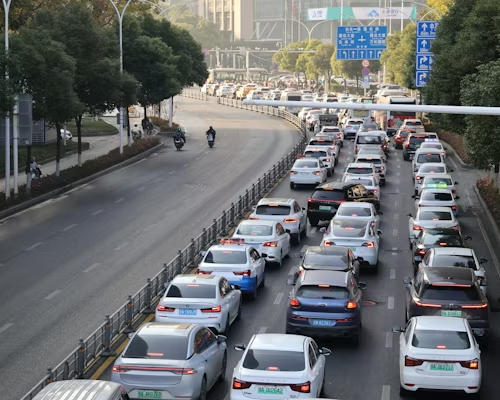
Traffic congestion is a fact of life for most drivers, especially in urban areas. Stop-and-go driving not only wastes time but also significantly increases fuel consumption and emissions. However, with the right techniques and mindset, you can navigate traffic more efficiently, saving money on fuel and reducing your environmental impact. Understanding how to drive efficiently in traffic is a valuable skill that benefits both your wallet and the planet.
Many drivers don't realize how much their driving habits affect fuel consumption, especially in traffic conditions. Aggressive acceleration, hard braking, and excessive idling all contribute to poor fuel economy. The good news is that small changes in your driving technique can lead to significant fuel savings over time. Traffic doesn't have to mean wasted fuel—with the right approach, you can maintain efficiency even in congested conditions.
This comprehensive guide covers everything you need to know about fuel-efficient driving in traffic. We'll explore techniques for smooth acceleration and braking, managing momentum, minimizing idling, and avoiding common fuel-wasting mistakes. Whether you're looking to save money on gas or reduce your carbon footprint, these tips will help you drive more efficiently in any traffic situation.
Step-by-Step Guidance: Fuel-Efficient Driving Techniques
Step 1: Anticipate Traffic Flow
Look far ahead and anticipate traffic patterns rather than reacting to the vehicle immediately in front of you. Watch for brake lights several cars ahead to understand when traffic is slowing. This allows you to coast rather than brake suddenly, saving fuel. Anticipating traffic flow helps you maintain momentum and avoid unnecessary acceleration and braking.
Step 2: Accelerate Smoothly and Gradually
When traffic starts moving, accelerate smoothly and gradually. Avoid jackrabbit starts that waste fuel. Press the accelerator gently and build speed progressively. Smooth acceleration is more fuel-efficient than rapid acceleration. If you're driving a manual transmission, shift through gears promptly rather than revving the engine. Gentle acceleration maximizes fuel economy.
Step 3: Maintain a Steady Speed
Whenever possible, maintain a steady speed rather than constantly accelerating and decelerating. Use cruise control on highways when traffic allows. In city driving, try to maintain a consistent pace by timing your approach to traffic lights. Steady driving is significantly more fuel-efficient than variable speed driving. Constant speed reduces fuel consumption.
Step 4: Coast Instead of Braking
When you see traffic slowing ahead, take your foot off the accelerator early and coast rather than waiting until the last moment to brake. Coasting uses no fuel while slowing your vehicle gradually. This technique not only saves fuel but also reduces wear on your brakes. Coasting is one of the most effective fuel-saving techniques in traffic.
Step 5: Minimize Idling
Idling consumes fuel while going nowhere. If you're going to be stopped for more than 30 seconds, turn off your engine. This includes waiting at railroad crossings, drive-thrus, and long traffic lights. Modern engines use very little fuel to restart, so turning off the engine saves fuel. Minimizing idling is essential for fuel efficiency in traffic.
Step 6: Use Your Gears Effectively
If you're driving a manual transmission, use your gears efficiently. Shift to higher gears as soon as possible without lugging the engine. Higher gears provide better fuel economy at cruising speeds. Avoid downshifting unnecessarily—use your brakes to slow down instead. Proper gear use maximizes engine efficiency.
Step 7: Maintain Proper Tire Pressure
Underinflated tires increase rolling resistance, reducing fuel economy. Check your tire pressure regularly and keep them inflated to the manufacturer's recommended pressure. Properly inflated tires can improve fuel economy by up to 3%. Check tire pressure at least once a month and before long trips. Proper tire maintenance is essential for fuel efficiency.
Step 8: Reduce Unnecessary Weight
Extra weight in your vehicle reduces fuel economy. Remove unnecessary items from your trunk and interior. If you have a roof rack or cargo box, remove it when not in use—it creates aerodynamic drag. Every 100 pounds of extra weight reduces fuel economy by about 1-2%. Lightening your vehicle improves efficiency.
Step 9: Use Air Conditioning Wisely
Air conditioning increases fuel consumption, especially at lower speeds. At highway speeds, the aerodynamic drag from open windows may use more fuel than AC. In city driving, consider opening windows instead of using AC at low speeds. Use AC efficiently by setting it to a comfortable but not excessively cold temperature. Smart AC use saves fuel.
Step 10: Plan Your Route and Timing
Plan your route to avoid the worst traffic congestion. Use traffic apps to find less congested routes. If possible, adjust your travel times to avoid peak traffic periods. Even a few minutes of route planning can save significant fuel by avoiding stop-and-go traffic. Smart route planning is essential for fuel efficiency.
Tips & Safety Notes: Fuel-Efficient Driving Practices
Combine Trips When Possible
Combine multiple errands into one trip rather than making several short trips. A cold engine uses more fuel than a warm one, so combining trips reduces the number of cold starts. Plan your errands efficiently to minimize total distance driven. Trip combining is one of the most effective fuel-saving strategies.
Use Cruise Control on Highways
Cruise control helps maintain a steady speed, which is more fuel-efficient than variable speed driving. Use cruise control on highways when traffic conditions allow. However, avoid using cruise control in heavy traffic or on hilly roads where it would cause unnecessary acceleration and deceleration. Proper cruise control use improves fuel economy.
Avoid High Speeds
Fuel economy decreases significantly at high speeds. Most vehicles achieve optimal fuel economy between 50-60 mph. Driving faster than 65 mph can reduce fuel economy by 10-15% or more. Stay within the speed limit and avoid unnecessary speeding. Moderate speeds maximize fuel efficiency.
Keep Your Vehicle Well-Maintained
A well-maintained vehicle operates more efficiently. Follow the manufacturer's recommended maintenance schedule. Change air filters regularly—a clogged filter can reduce fuel economy by up to 10%. Use the recommended grade of motor oil. Proper maintenance ensures optimal engine efficiency and fuel economy.
Close Windows at Highway Speeds
Open windows create significant aerodynamic drag at highway speeds, reducing fuel economy. Close windows and use your vehicle's ventilation system or AC when driving at higher speeds. At lower city speeds, open windows may be more efficient than AC. Understanding when to use windows versus AC saves fuel.
Avoid Excessive Idling
Idling for more than 10 seconds uses more fuel than restarting the engine. Turn off your engine when waiting for more than 30 seconds. This includes waiting at drive-thrus, railroad crossings, and long traffic lights. Modern engines start easily and use minimal fuel to restart. Minimizing idling is crucial for fuel efficiency.
Use the Right Octane Fuel
Use the octane rating recommended by your vehicle's manufacturer. Using higher octane than recommended doesn't improve fuel economy or performance in most vehicles. Using lower octane than recommended can reduce efficiency and potentially damage your engine. Follow manufacturer recommendations for optimal fuel economy.
Remove Roof Racks When Not in Use
Roof racks and cargo boxes create significant aerodynamic drag, reducing fuel economy. Remove them when not in use. Even an empty roof rack can reduce fuel economy by several percent. Only use roof racks when absolutely necessary. Reducing aerodynamic drag improves fuel efficiency.
Monitor Your Fuel Economy
Track your fuel economy to understand how your driving habits affect efficiency. Many modern vehicles have fuel economy displays that provide real-time feedback. Use this information to adjust your driving technique. Monitoring fuel economy helps you identify areas for improvement and track your progress.
Common Mistakes: Fuel-Wasting Habits to Avoid
Aggressive Acceleration
Rapid acceleration is one of the biggest fuel-wasting habits. Many drivers accelerate quickly from stops, not realizing how much fuel this wastes. Accelerate smoothly and gradually instead. Gentle acceleration can improve fuel economy by 10-40% in city driving. Smooth acceleration is essential for fuel efficiency.
Hard Braking
Hard braking wastes the energy you used to accelerate and often leads to rapid acceleration to regain speed. Many drivers brake late and hard, then accelerate quickly to catch up. Instead, coast early and brake gently. Smooth braking saves fuel and reduces wear on your brakes.
Excessive Idling
Idling consumes fuel while your vehicle goes nowhere. Many drivers idle unnecessarily at drive-thrus, while waiting for passengers, or at long traffic lights. Turn off your engine if you'll be stopped for more than 30 seconds. Minimizing idling is one of the easiest ways to save fuel.
Speeding
Speeding significantly reduces fuel economy. Many drivers exceed the speed limit without realizing the impact on fuel consumption. Stay within the speed limit and avoid unnecessary speeding. Moderate speeds maximize fuel efficiency. Speeding wastes fuel and increases safety risks.
Carrying Unnecessary Weight
Extra weight in your vehicle reduces fuel economy. Many drivers carry unnecessary items in their trunk or backseat. Remove anything you don't need for your journey. Lightening your vehicle improves fuel economy, especially in city driving with frequent stops and starts.
Driving with Underinflated Tires
Underinflated tires increase rolling resistance and reduce fuel economy. Many drivers don't check their tire pressure regularly. Check your tire pressure at least once a month and keep them properly inflated. Proper tire pressure can improve fuel economy by up to 3%.
Using AC Excessively
Air conditioning increases fuel consumption, especially at lower speeds. Many drivers use AC constantly, even when it's not necessary. At low speeds, consider opening windows instead. Use AC efficiently by setting it to a comfortable temperature. Smart AC use saves fuel.
Rapid Gear Changes
In manual transmission vehicles, rapid gear changes and over-revving waste fuel. Many drivers stay in lower gears longer than necessary. Shift to higher gears promptly without lugging the engine. Proper gear use maximizes fuel economy.
Not Anticipating Traffic
Many drivers react to the vehicle immediately in front rather than anticipating traffic flow ahead. This leads to sudden braking and acceleration. Look far ahead and anticipate traffic patterns. Anticipating traffic allows you to coast and maintain momentum, saving fuel.
Making Multiple Short Trips
Multiple short trips are less fuel-efficient than combining errands into one trip. Cold engines use more fuel than warm ones. Combine errands when possible to reduce the number of cold starts. Trip combining is one of the most effective fuel-saving strategies.
Real-World Examples
For instance, maintaining a 3-second following distance in normal conditions gives you enough time to react to sudden stops.
When driving in rain, reduce your speed by at least 5-10 mph below the posted limit to maintain traction.
A study by the AAA Foundation found that distracted driving increases crash risk by 8 times.
Data and Statistics
According to NHTSA, approximately 94% of serious crashes are related to human error.
Source: NHTSA
According to IIHS, approximately 50% of fatal crashes are related to failure to wear seatbelts.
Source: IIHS
Practical Checklist
- Check tire pressure before driving
- Adjust mirrors for optimal visibility
- Ensure all passengers are wearing seatbelts
- Check weather conditions before departure
- Plan your route and check for traffic
Frequently Asked Questions
Q: What should I do if my car starts hydroplaning?
A: If your car starts hydroplaning, ease off the accelerator gently and steer straight. Do not slam on the brakes, as this can cause you to lose control completely. Once you regain traction, you can slowly accelerate again.
Q: How can I improve my night driving safety?
A: To improve night driving safety, keep your windshield clean, use high beams appropriately (when no oncoming traffic is present), reduce speed, and increase following distance. Also, ensure your headlights are properly aimed and clean.
Visual Learning Resources
While this article provides comprehensive text explanations, visual aids can enhance understanding. Consider the following resources for additional learning:
- Diagrams: Look for technical diagrams showing component relationships and system interactions
- Infographics: Visual representations of data and statistics help grasp complex information quickly
- Video Tutorials: Step-by-step video demonstrations provide practical guidance
- Interactive Simulations: Online tools allow you to experiment with concepts safely
These resources complement the written content and cater to different learning styles. Visual learners particularly benefit from diagrams and infographics, while hands-on learners may prefer video tutorials and simulations.
Expert Tips and Best Practices
💡 Pro Tip #1: Prevention is Better Than Cure
Regular maintenance and proactive checks prevent most major issues. Establish a routine inspection schedule and stick to it. Small problems caught early are much easier and less expensive to fix than major failures.
💡 Pro Tip #2: Quality Matters
When replacing parts or fluids, always use quality products that meet or exceed manufacturer specifications. Inferior products may save money initially but often lead to premature failure and additional costs down the road.
💡 Pro Tip #3: Documentation is Your Friend
Keep detailed records of all maintenance, repairs, and modifications. This documentation helps track service intervals, identify recurring issues, and increases resale value. Digital photos of work performed can be particularly valuable.
Conclusion
Fuel-efficient driving in traffic is a skill that can save you significant money on fuel while reducing your environmental impact. By implementing the techniques outlined in this guide, you can navigate congested conditions more efficiently. The key is to anticipate traffic, drive smoothly, maintain steady speeds, and minimize unnecessary fuel consumption.
Remember that small changes in your driving habits can lead to significant fuel savings over time. Focus on smooth acceleration and braking, maintain proper vehicle maintenance, and plan your routes wisely. These practices not only save money but also reduce wear on your vehicle and contribute to a cleaner environment.
Fuel-efficient driving doesn't mean sacrificing safety or convenience—it means driving smarter. By developing good habits and staying aware of your driving technique, you can achieve better fuel economy in any traffic situation. The savings add up over time, making the effort well worth it.
Start implementing these techniques today and track your fuel economy to see the improvement. With practice, fuel-efficient driving becomes second nature. Save money, reduce emissions, and become a more responsible driver by adopting these smart driving habits.