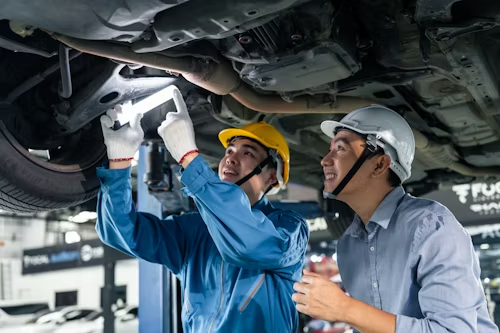
Introduction
The transmission is one of the most critical components in a vehicle's drivetrain, responsible for transferring power from the engine to the wheels while allowing the engine to operate within its optimal RPM range. Without a transmission, engines would either stall at low speeds or over-rev at high speeds, making practical driving impossible.
Transmissions come in various types, each with its own advantages and characteristics. From traditional manual transmissions that give drivers complete control to sophisticated automatic transmissions that shift seamlessly, the technology has evolved significantly over the years. Understanding how these systems work provides valuable insight into vehicle operation and performance.
Whether you're a car enthusiast, a new driver, or simply curious about how your vehicle works, this comprehensive guide will explain the different types of transmissions, their components, how they function, and what makes each type unique. By the end, you'll have a thorough understanding of this essential automotive system.
How It Works: The Basic Principles of Transmissions
Gear Ratios and Torque Multiplication
At its core, a transmission uses gear ratios to multiply torque and manage engine speed. Lower gears provide higher torque multiplication, allowing the vehicle to accelerate from a standstill. Higher gears provide lower torque multiplication but allow the engine to operate at lower RPMs for efficient cruising.
The transmission must balance several competing requirements: providing enough torque for acceleration, maintaining engine efficiency at cruising speeds, and preventing the engine from over-revving or stalling. This balance is achieved through carefully designed gear ratios that optimize performance across the vehicle's operating range.
The Clutch System
In manual transmissions, the clutch is the critical component that allows smooth gear changes. The clutch temporarily disconnects the engine from the transmission, allowing gears to be shifted without grinding. When the clutch pedal is pressed, the clutch plates separate, interrupting power transfer.
Releasing the clutch pedal gradually re-engages the clutch plates, transferring power back to the wheels. Proper clutch operation requires coordination between the clutch pedal and accelerator to achieve smooth acceleration. The clutch system includes the clutch disc, pressure plate, release bearing, and hydraulic or cable actuation mechanism.
Automatic Transmission Fundamentals
Automatic transmissions eliminate the need for a clutch pedal by using a torque converter instead of a traditional clutch. The torque converter uses fluid coupling to transfer power from the engine to the transmission, allowing smooth engagement and disengagement without driver intervention.
Automatic transmissions use planetary gear sets to achieve different gear ratios. These complex arrangements of gears can provide multiple gear ratios without the need for manual shifting. Modern automatic transmissions use computer-controlled hydraulic systems to determine when to shift based on driving conditions.
Components and Functions: Transmission Parts Explained
Manual Transmission Components
Manual transmissions consist of several key components working together. The input shaft connects to the engine through the clutch, while the output shaft connects to the driveshaft. Layshafts contain the various gear ratios that mesh with gears on the input and output shafts.
The gear shift mechanism includes the gear selector, linkage, and synchronizers. Synchronizers match the speed of gears before engagement, allowing smooth shifting without double-clutching. The transmission case houses all components and contains transmission fluid for lubrication and cooling.
Automatic Transmission Components
Automatic transmissions are more complex than manuals, incorporating numerous specialized components. The torque converter replaces the clutch, using fluid dynamics to transfer power. Planetary gear sets provide multiple gear ratios through different combinations of sun gears, planet gears, and ring gears.
The valve body is the hydraulic control center, directing fluid pressure to engage different gears. Clutch packs and brake bands hold specific components to achieve desired gear ratios. The transmission control module (TCM) is the computer that manages shifting based on various sensors and driver inputs.
Continuously Variable Transmission (CVT)
CVTs use a different approach than traditional transmissions, employing a belt or chain running between two variable-diameter pulleys. By changing the diameter of these pulleys, the CVT can achieve an infinite number of gear ratios, keeping the engine at its optimal RPM for any driving condition.
This design provides seamless acceleration without the stepped gear changes of traditional transmissions. CVTs are particularly efficient because they can keep the engine in its most efficient operating range. However, some drivers find the lack of traditional gear changes less engaging.
Dual-Clutch Transmission (DCT)
Dual-clutch transmissions combine the efficiency of manual transmissions with the convenience of automatics. They use two separate clutches: one for odd gears and one for even gears. While one clutch is engaged, the other pre-selects the next gear, enabling virtually instant shifts.
This design provides lightning-fast gear changes and improved efficiency compared to traditional automatics. DCTs are popular in performance vehicles due to their quick shifting capabilities. However, they can be more complex and expensive to manufacture and maintain.
Applications / Real-World Examples: Transmissions in Different Vehicles
Sports Cars
Sports cars often feature specialized transmissions optimized for performance. Manual transmissions remain popular among enthusiasts for the direct connection and control they provide. Many modern sports cars use dual-clutch transmissions for lightning-fast gear changes and improved performance.
High-performance vehicles may include paddle shifters that allow manual gear selection even with automatic transmissions. These systems often include multiple driving modes that adjust shift points and response characteristics for different driving conditions, from comfortable cruising to aggressive track driving.
Economy Cars
Economy cars prioritize fuel efficiency and affordability, often using simpler transmission designs. Many economy vehicles use CVTs for their efficiency and smooth operation. Manual transmissions remain popular in economy cars for their lower cost and better fuel economy.
Automatic transmissions in economy cars typically have fewer gears than performance vehicles, focusing on efficiency rather than performance. These transmissions are designed to keep the engine at low RPMs for maximum fuel economy during normal driving conditions.
Trucks and SUVs
Trucks and SUVs require transmissions capable of handling heavy loads and towing. These vehicles often use automatic transmissions with more robust construction and specialized gear ratios optimized for torque. Many trucks include tow/haul modes that adjust shift patterns for heavy loads.
The transmissions in these vehicles must balance the need for low-end torque for acceleration and towing with the ability to cruise efficiently on highways. Some trucks offer multiple transmission options, including manual transmissions for maximum control in off-road situations.
Hybrid Vehicles
Hybrid vehicles use specialized transmissions that combine power from gasoline engines and electric motors. These transmissions must manage power from multiple sources while optimizing efficiency. Some hybrids use continuously variable transmissions for seamless power delivery between engine and motor.
Other hybrid systems use planetary gear sets to blend power from different sources. These sophisticated transmissions can operate in various modes, including electric-only, engine-only, or combined power operation, depending on driving conditions and battery charge level.
Real-World Examples
For example, a typical 2.0L four-cylinder engine produces around 150-200 horsepower.
Consider the Toyota Prius, which uses a hybrid system to achieve over 50 MPG.
The Ford F-150's 3.5L EcoBoost V6 engine produces 400 horsepower while maintaining good fuel efficiency.
Data and Statistics
According to SAE International, approximately 90% of modern engines are related to advanced materials and manufacturing techniques.
Source: SAE International
According to EPA, approximately 25% of fuel efficiency improvements are related to hybrid technology.
Source: EPA
Practical Checklist
- Check the engine oil level and condition
- Inspect the air filter for dirt and debris
- Verify coolant level and quality
- Check all belts and hoses for wear
- Inspect spark plugs for wear or damage
Frequently Asked Questions
Q: What is the most common cause of engine failure?
A: The most common cause of engine failure is lack of proper maintenance, particularly not changing the oil regularly. Dirty oil can cause excessive wear on engine components, leading to premature failure.
Q: How often should I change my engine oil?
A: Most manufacturers recommend changing your oil every 5,000 to 7,500 miles for conventional oil, or every 10,000 to 15,000 miles for synthetic oil. Always check your owner's manual for specific recommendations.
Technical Deep Dive
Let's explore the technical aspects in greater detail. Understanding the underlying principles and mechanisms provides a foundation for more advanced automotive knowledge and practical applications.
Key Technical Principles
- Principle 1: The fundamental physics and engineering concepts that govern this system
- Principle 2: How these principles are applied in real-world scenarios
- Principle 3: The mathematical and scientific foundations behind the technology
Advanced Applications
Modern applications of this technology have evolved significantly. Current implementations include sophisticated control systems, advanced materials, and integration with other vehicle systems. These advancements have improved efficiency, safety, and performance dramatically.
Visual Learning Resources
While this article provides comprehensive text explanations, visual aids can enhance understanding. Consider the following resources for additional learning:
- Diagrams: Look for technical diagrams showing component relationships and system interactions
- Infographics: Visual representations of data and statistics help grasp complex information quickly
- Video Tutorials: Step-by-step video demonstrations provide practical guidance
- Interactive Simulations: Online tools allow you to experiment with concepts safely
These resources complement the written content and cater to different learning styles. Visual learners particularly benefit from diagrams and infographics, while hands-on learners may prefer video tutorials and simulations.
Conclusion
Transmission systems are marvels of engineering that enable vehicles to operate efficiently across a wide range of speeds and conditions. From the simple elegance of manual transmissions to the sophisticated complexity of modern automatics, each type offers unique advantages for different driving needs.
Understanding how transmissions work provides valuable insight into vehicle operation and performance. Whether you prefer the engagement of a manual, the convenience of an automatic, or the efficiency of a CVT, each transmission type represents a different approach to solving the fundamental challenge of matching engine power to driving conditions.
As automotive technology continues to evolve, transmissions will become even more sophisticated. Electric vehicles, with their instant torque and broad RPM range, require different transmission approaches than traditional vehicles. The future promises continued innovation in transmission technology, further improving efficiency, performance, and the driving experience.
Whether you're a car enthusiast, a new driver, or simply curious about automotive technology, understanding transmissions enhances your appreciation of the complex systems that make modern transportation possible. The next time you shift gears or feel your vehicle change gears automatically, you'll have a deeper understanding of the remarkable engineering at work.
The transmission's role in modern vehicles extends beyond simple power transfer. It's a critical component that influences fuel economy, emissions, driving dynamics, and overall vehicle performance. Manufacturers continue to invest heavily in transmission research and development, seeking to improve efficiency and reduce the environmental impact of transportation.
For drivers, understanding transmission technology can lead to better driving habits and more informed vehicle purchasing decisions. By recognizing the strengths and limitations of different transmission types, drivers can choose vehicles that best match their driving style and needs. This knowledge also helps drivers maintain their vehicles properly, ensuring optimal performance and longevity.